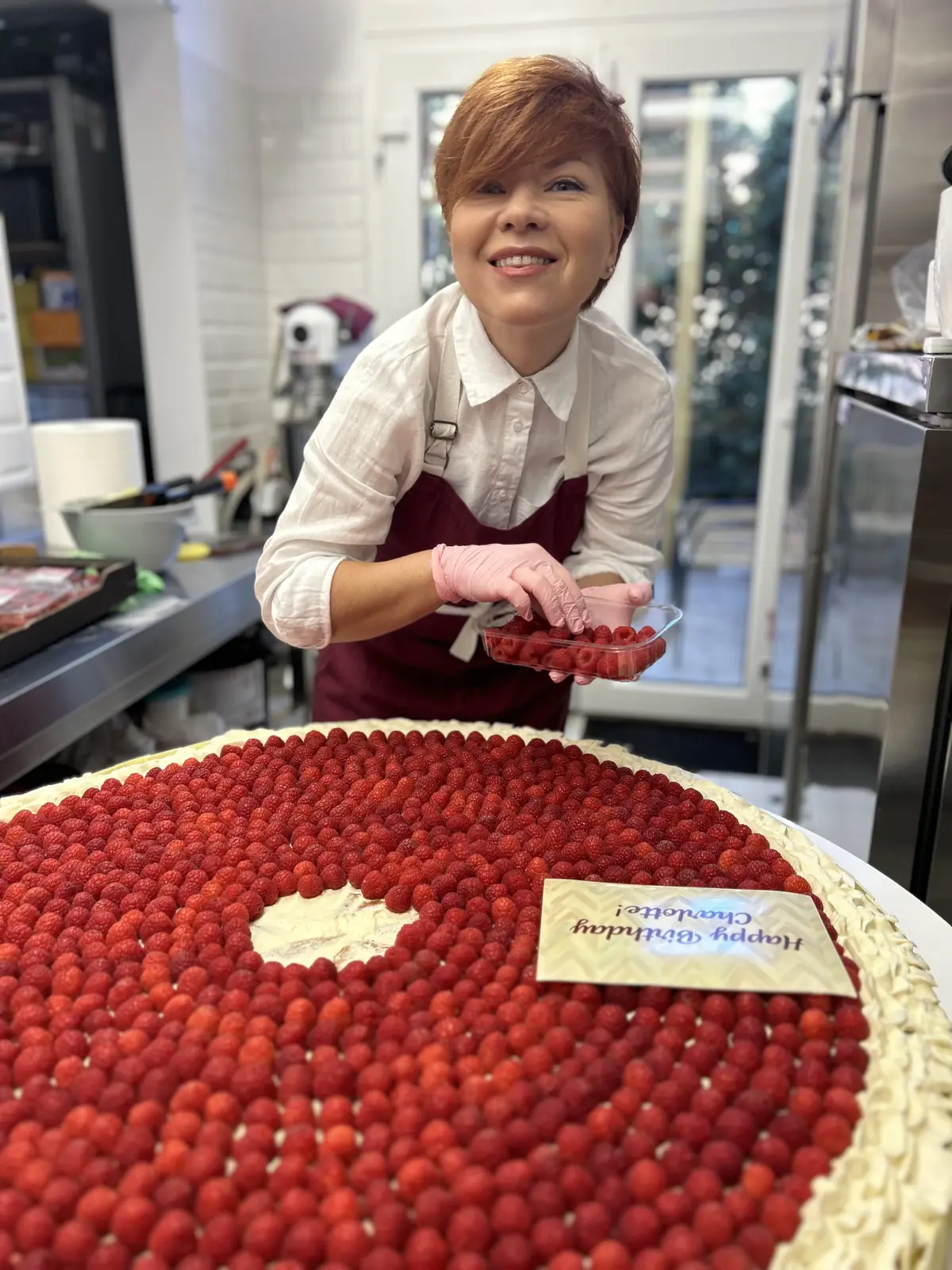
A classic baked cheesecake should be smooth, creamy and rich without becoming dry or eggy. I want a clean slice, a gentle tang from sour cream and a centre that sets softly rather than being baked until rigid.
My classic cheesecake formula
Yield: one 23 cm / 9-inch cheesecake, about 12 slices.
- 180 g graham-cracker or plain digestive-style crumbs
- 75 g unsalted butter, melted
- 25 g caster sugar for the crust
- 1 g fine salt for the crust
- 900 g full-fat cream cheese
- 270 g caster sugar for the filling
- 20 g cornstarch
- 2 g fine salt for the filling
- 200 g whole egg, about 4 large eggs without shells
- 180 g full-fat sour cream
- 10 g vanilla extract or paste
- Finely grated zest of 1 lemon, optional
How I make classic cheesecake
I heat the oven to 175°C / 347°F. I mix the crumbs with melted butter, sugar and salt, press them firmly into the base of a 23 cm / 9-inch springform pan and bake for about 10–12 minutes, until the crust is set and lightly golden. I let it cool and reduce the oven to 160°C / 320°F.
For the filling, I bring the cream cheese, eggs and sour cream close to room temperature. I mix the cream cheese on low speed only until it is completely smooth. I combine the sugar, cornstarch and salt, then add them gradually. I add the eggs in several additions, mixing only until each disappears into the batter. Finally I mix in the sour cream, vanilla and optional lemon zest.
The batter should be smooth and glossy, but not airy. Cheesecake is a custard system, not a sponge cake; extra air gives unnecessary rise and makes cracking more likely.
I wrap the outside of the springform carefully, set it inside a roasting pan and pour the filling over the cooled crust. I add hot water to the roasting pan until it comes roughly halfway up the cheesecake pan.
I bake at 160°C / 320°F until the outside is set and the centre still moves as one soft mass, usually about 75–90 minutes. A thermometer in the centre should read about 66–68°C / 150–155°F. I do not wait for the middle to become firm in the oven because residual heat continues to set it.
I switch off the oven, crack the door and leave the cheesecake inside for about 30 minutes. Then I remove it from the water bath and let it cool on a rack. Once it is no longer hot, I refrigerate it for at least 8 hours, preferably overnight.
Why I use sour cream
Sour cream gives the filling a gentle acidity and softens the impression of richness. Heavy cream is also used in respected New York-style formulas, so I do not treat sour cream as the only legitimate choice. It is simply the branch I prefer for this classic version.
Why I use a small amount of cornstarch
A little starch gives the cheesecake slightly more tolerance and helps it slice cleanly. Too much would make the filling feel cakey or pasty, which is exactly what I want to avoid.
Do I really need a water bath?
You can bake cheesecake without one, but a water bath makes the heat around the pan gentler and more even. That reduces the difference between the set edge and the softer centre and gives me a wider margin before the outside overcooks.
How do I know when cheesecake is done?
The edge should look set, while the centre should still wobble when the pan moves. For a creamy texture, I use an internal centre temperature of about 66–68°C / 150–155°F as a useful objective check.
Why did my cheesecake crack?
The first thing I check is overbaking. A cheesecake that is baked until completely firm has usually gone too far. Excessive aeration and abrupt cooling can also increase cracking, so I mix gently and cool gradually.
Why is my cheesecake lumpy?
Cold cream cheese is the usual cause. I smooth the cream cheese before adding eggs or sour cream and keep the other dairy ingredients close enough to room temperature that they can emulsify without aggressive mixing.
Why did my cheesecake rise and then sink?
Some movement is normal, but a dramatic soufflé-like rise usually means too much air was whipped into the batter. I use low speed and mix for homogeneity, not volume.
Why is the crust soggy?
The usual cause is water leaking through the springform pan during the water bath. Wrap the outside carefully and keep the crust pre-baked before the filling goes in.
Can I make cheesecake ahead?
Yes. Cheesecake improves practically when it is made a day ahead because it needs a long chill before slicing. I prefer at least 8 hours in the refrigerator.
Can I freeze cheesecake?
Yes. Chill it completely first, then freeze the whole cake or individual slices well wrapped. Thaw slowly in the refrigerator. The texture is usually very good after freezing, although a freshly chilled cheesecake is the reference texture.
What is the difference between classic cheesecake and Basque cheesecake?
Classic American cheesecake is baked gently, usually with a crumb crust, and aims for a pale, even, creamy set. Basque cheesecake is crustless, baked much hotter and intentionally develops a deeply caramelised top with a softer, more rustic centre.
What is the difference between classic cheesecake and New York cheesecake?
“New York cheesecake” is not one rigid formula. Famous versions use different bases, different amounts of egg, and either sour cream or heavy cream. The common identity is a rich cream-cheese cake with a substantial, creamy texture. This recipe sits firmly in that family but is presented simply as my classic baked cheesecake.
Serving and variations
I serve it plain, with fresh berries, fruit compote, caramel or a thin layer of fruit confit. I keep toppings separate from the base formula so they do not change the cheesecake’s set.