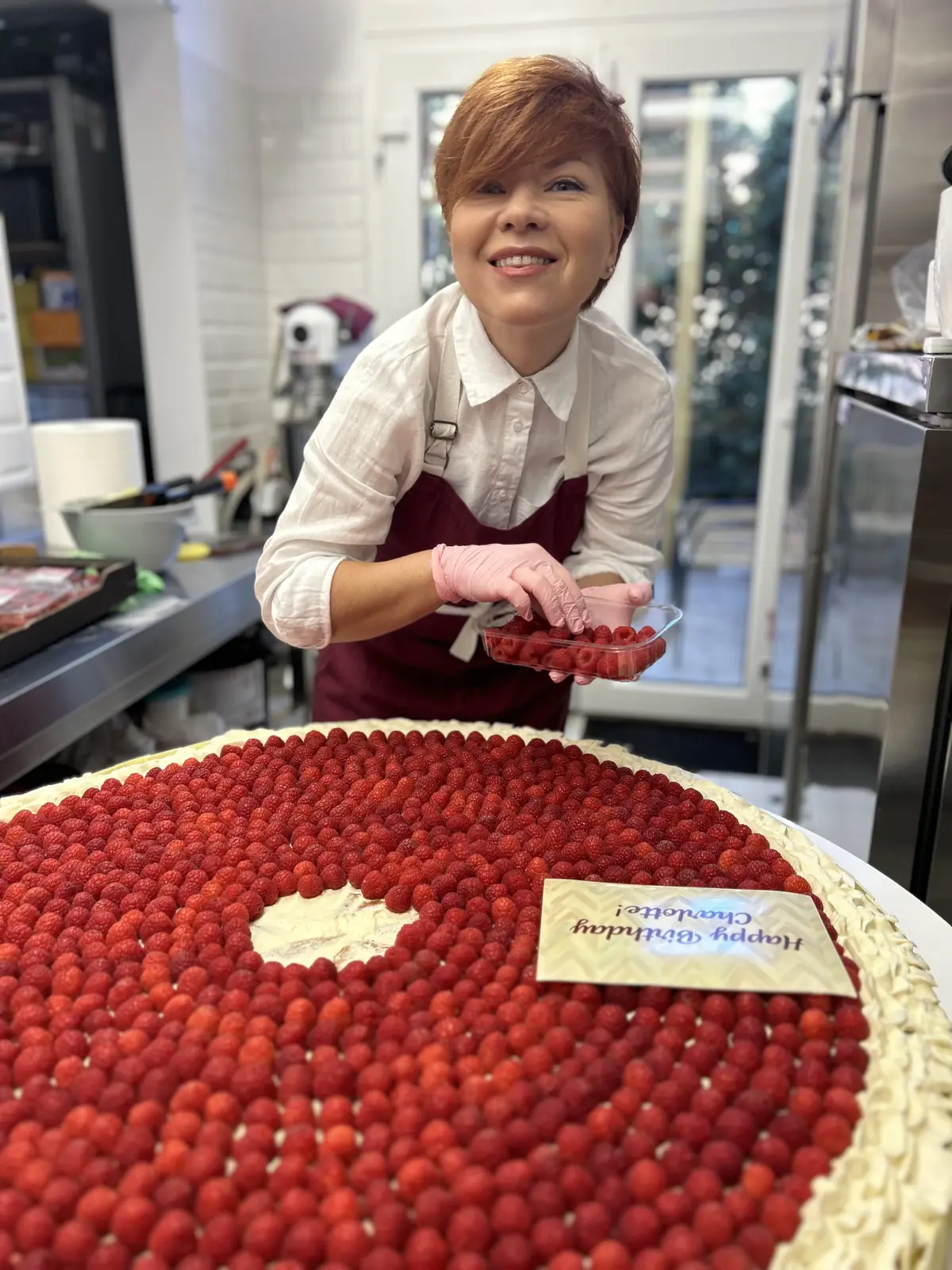
Crème diplomate is the cream I choose when I want the flavor and definition of pastry cream, but with a lighter, more delicate texture. The important point is balance: the pastry cream must be properly cooked, the gelatin must be controlled, and the whipped cream should soften the base without turning it loose or foamy.
My crème diplomate formula
For approximately 900 g finished cream:
- 500 g whole milk
- 100 g egg yolks
- 80 g sugar
- 35 g cornstarch
- 6 g gelatin, approximately 200 Bloom
- Vanilla, to taste
- 200 g cold whipping cream, about 35% fat
If your gelatin has a substantially different Bloom strength, the quantity should be adjusted rather than substituted gram for gram. For a professional formula, gelatin strength matters.
Method
1. Hydrate the gelatin according to the type you are using.
2. Heat the milk with the vanilla until steaming. It does not need prolonged boiling.
3. In a bowl, mix the yolks with the sugar, then whisk in the cornstarch until smooth. I avoid beating unnecessary air into this mixture.
4. Temper the yolk mixture with part of the hot milk, return everything to the saucepan, and cook while whisking continuously. Once the cream reaches a full boil and thickens, continue cooking briefly so the starch is properly cooked and the pastry cream becomes smooth and stable.
5. Remove from the heat and incorporate the hydrated gelatin thoroughly. There should be no visible gelatin pieces or streaks.
6. Transfer the pastry cream to a shallow container, cover the surface directly, and cool it promptly. Before adding the whipped cream, the base must be cool enough not to melt the cream, but it should still be smooth and workable rather than set into a hard gel.
7. Whip the cold cream to soft peaks. I want it supple, not stiff or grainy.
8. Smooth the cooled pastry-cream base with a whisk or spatula. Fold in the whipped cream gently in two or three additions until the texture is completely homogeneous.
9. Use the crème diplomate promptly for filling or assembly, then refrigerate so it can develop its final structure.
What crème diplomate actually is
Crème diplomate is built from crème pâtissière and whipped cream, with gelatin providing additional structure in the version I use here. This gives it an interesting position between a dense pastry cream and a very light whipped-cream filling.
The pastry cream supplies flavor, body and starch-thickened structure. The whipped cream makes that structure lighter and more elegant. Gelatin helps the finished cream hold cleanly in pastries where shape matters.
You will sometimes see the name used differently. French pastry terminology is not perfectly uniform between schools and chefs: some formulas called diplomate contain gelatin, while some lighter pastry-cream-and-whipped-cream preparations are described without it or under names such as crème légère, princesse or madame. For this recipe, I use crème diplomate for the structurally reliable gelatin-set version.
Why I use gelatin
Gelatin is not there to make the cream rubbery. At the correct level, it provides quiet structural support.
This is especially useful when the cream must hold inside a fruit tart, choux pastry, éclair or another assembled dessert. It also gives more control when a pastry needs to be portioned neatly after refrigeration.
Too much gelatin, however, changes the character completely. The cream becomes bouncy and loses the soft mouthfeel that makes diplomate attractive. This is why I specify both the gelatin weight and an approximate Bloom strength.
Why the whipped-cream ratio is not universal
There is no single useful whipped-cream percentage for every crème diplomate application. More whipped cream gives a lighter, softer result; less gives a cream with more pastry-cream character and stronger definition.
In my formula, 200 g cream against a pastry-cream base made from 500 g milk gives a balanced filling: noticeably lighter than crème pâtissière, but still controlled enough for pastry assembly.
If you change this ratio substantially, you are not simply changing richness. You are changing aeration, firmness, flavor intensity and the way the cream behaves after chilling.
Crème diplomate vs pastry cream
Crème pâtissière is cooked milk, yolks, sugar and starch. It is smooth, rich and comparatively dense.
Crème diplomate begins with that pastry-cream structure and lightens it with whipped cream. In this recipe, gelatin also reinforces the structure. The result is softer on the palate and more aerated, while still behaving like a pastry filling rather than ordinary whipped cream.
If I need a firm cooked cream on its own, I use pastry cream. If I want the same family of flavor with a lighter texture and elegant volume, diplomate is often the better choice.
Why crème diplomate becomes runny
A runny diplomate usually begins with one of four problems.
- The pastry cream was undercooked. Starch must be properly gelatinized; a weak base cannot become a strong finished cream simply because gelatin and whipped cream are added.
- The gelatin quantity or strength was insufficient. Bloom strengths are not interchangeable gram for gram.
- The pastry-cream base was too warm when the whipped cream was folded in. Warmth melts the milk fat structure that holds the whipped cream’s air.
- The whipped cream itself was under-whipped. It should be soft and supple, but it still needs enough structure to hold air.
Why it becomes lumpy
Lumps can come from badly cooked pastry cream, gelatin that was not fully dissolved, or a base allowed to set too firmly before folding.
If the cold pastry cream has become slightly set, smooth it carefully before folding in the whipped cream. Do not try to remove large lumps by aggressive mixing after the whipped cream has been added; that destroys the aeration you are trying to preserve.
How soft should the whipped cream be?
I stop at soft peaks. When the whisk is lifted, the cream should hold a gentle shape but still look smooth and flexible.
Stiffly whipped cream is more difficult to incorporate evenly and can leave a coarse, almost broken texture. Diplomate should feel creamy first and aerated second.
When should I add the gelatin?
I add hydrated gelatin to the hot, fully cooked pastry cream after taking it from the heat. The residual heat dissolves it evenly through the base.
Adding gelatin too late, once the pastry cream is cold, makes even distribution much more difficult. Adding whipped cream while the base is still hot creates the opposite problem: the cream melts and loses its aeration.
The sequence matters: cook, add gelatin, cool, smooth, then fold in softly whipped cream.
Can I make crème diplomate ahead?
The pastry-cream base can be prepared ahead and chilled correctly. Once the whipped cream has been folded in, however, I prefer to use the diplomate for assembly promptly and allow it to set in the finished pastry.
For best quality, keep it continuously refrigerated and treat it as a fresh dairy-and-egg preparation. Exact safe holding time depends on production hygiene, cooling speed, refrigerator temperature and local food-safety rules; I would not replace those controls with a universal number of days.
Can crème diplomate be frozen?
I do not consider freezing the default storage method for this cream. Freezing and thawing can disturb both the starch-thickened pastry cream and the aerated cream structure, producing water release or a less refined texture.
If a particular finished pastry is intended for frozen production, I would test that complete formula and thawing process rather than assume that a general diplomate recipe will behave perfectly after freezing.
Where I use crème diplomate
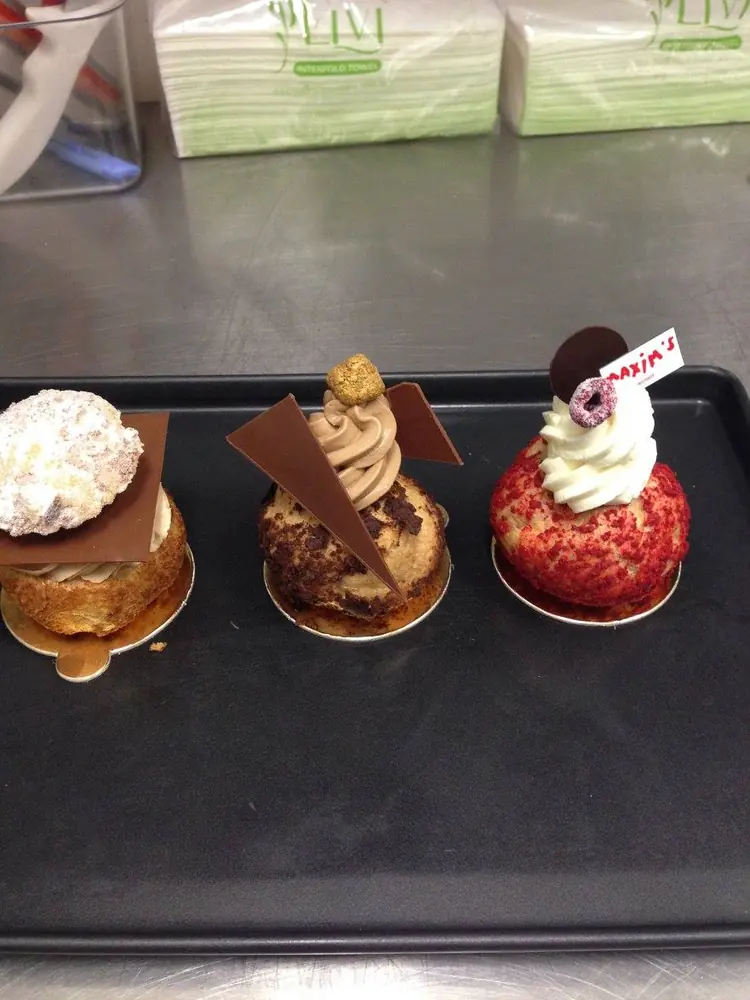
It is particularly useful in fresh fruit tarts, éclairs, profiteroles and other choux pastries where I want more lightness than straight pastry cream. It can also work in layered pastries when the required structure is compatible with its soft, aerated character.
For a French fruit tart, it gives a lighter alternative to classic pastry cream beneath the fruit. In choux, the contrast between a dry shell and cold, soft diplomate is especially pleasant.
The principle to remember
A good crème diplomate is not simply pastry cream with whipped cream mixed into it. Each structure has to be correct before they meet. I fully cook the pastry cream, dissolve the gelatin evenly, cool the base to a workable temperature, whip the cream only to soft peaks, and fold gently.
When those stages are controlled, the finished cream is light without being fragile, stable without feeling gelled, and clean enough to use as a professional pastry filling.