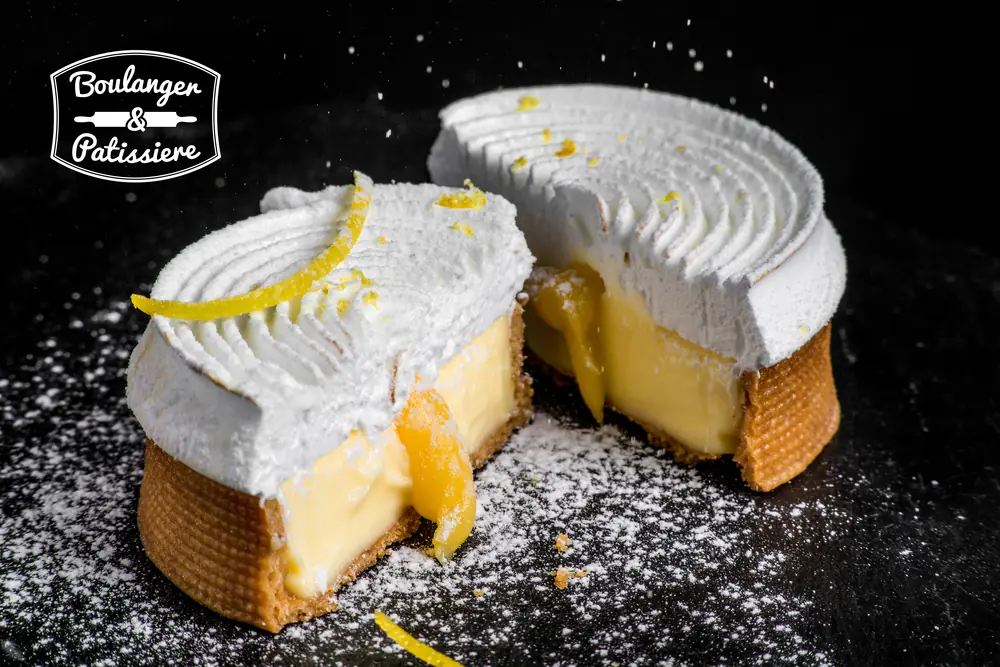
A good lemon tart should taste bright and clean, not aggressively sour and not heavy with sugar. I want a crisp sweet shell and a lemon cream that is smooth, intensely citrusy and rich enough to soften the acidity without hiding it. This is the version I use as my base: a fully baked pâte sucrée shell filled with a cooked lemon cream.
My lemon tart formula
Yield: one 22–24 cm tart, about 8–10 servings.
For the tart shell, use one batch of my Pâte Sucrée recipe, or approximately 320–380 g raw dough to line one 22–24 cm tart ring.
- 132 g granulated sugar
- 3 g finely grated lemon zest
- 120 g whole eggs
- 96 g freshly squeezed lemon juice
- 180 g unsalted butter, cut into small pieces
- 2 g fine salt
1. Bake the tart shell completely
Roll the chilled pâte sucrée to about 2.5–3 mm, line the tart ring without stretching the dough, chill it again, then bake until the shell is evenly golden and completely dry. A pale shell is not finished: once the lemon cream is added, any remaining moisture in the pastry will become much more noticeable.
For my pâte sucrée, I normally bake at about 160°C / 320°F until the shell is dry and evenly coloured. The exact time depends on the ring, dough thickness and oven. Cool the shell completely before filling.
2. Prepare the lemon base
Rub the lemon zest into the sugar with your fingertips. This releases the aromatic oils before the mixture is cooked.
Whisk in the eggs, then add the fresh lemon juice and salt. Mix until homogeneous without trying to incorporate unnecessary air.
3. Cook the lemon cream
Cook the mixture gently over a bain-marie or in a heavy saucepan over controlled heat, whisking continuously, until it reaches about 80°C / 176°F and visibly thickens.
The cream should coat the whisk and leave clear tracks for a moment. Do not boil it aggressively. The eggs provide the structure, and excessive heat can produce a grainy or scrambled texture.
4. Strain and cool slightly
Pass the hot cream through a fine sieve to remove any cooked egg particles and the coarse zest.
Let it cool to approximately 55–60°C / 131–140°F before adding the butter.
5. Emulsify the butter
Add the butter progressively while blending with an immersion blender. Keep the blender head below the surface so you do not introduce large air bubbles.
Continue blending until the cream is completely smooth, glossy and homogeneous. At this stage it should look more like a fine pastry cream or very soft buttercream than a conventional jam-like lemon curd.
6. Chill the cream
Cover the surface directly and refrigerate until fully cold and set, preferably for at least 4 hours.
7. Fill the tart
Whisk or stir the cold lemon cream briefly only if necessary to restore a smooth piping or spreading texture. Fill the completely cooled tart shell and level the surface.
Chill the assembled tart until the cream is firm, then serve it cool rather than ice-cold so the butter softens slightly and the lemon aroma becomes more expressive.
What defines a classic French lemon tart?
There are several legitimate lemon-tart families, which is why recipes can look surprisingly different.
The version I am describing here is based on a fully baked sweet tart shell and a separately cooked lemon cream. The filling is set by egg proteins and then refined with butter. It does not depend on starch, gelatin or a second bake inside the tart shell.
Another valid style uses a liquid lemon-and-cream custard that is poured into the shell and baked gently. That produces a softer baked-custard texture. It is a different system rather than a correction to this one.
Lemon meringue tart is another variation. The meringue is a finishing component, not something a classic lemon cream requires for structure.
Why I use pâte sucrée for lemon tart
The shell has an important job in this dessert. Lemon cream is smooth, rich and moist, so the pastry needs to provide a dry, crisp contrast.
Pâte sucrée works particularly well because it can be rolled thinly, baked cleanly and gives a fine, delicate bite without becoming flaky. Its sweetness also moderates the acidity of the lemon cream.
The important point is not simply to choose a sweet dough. The shell must be fully baked. If the base still looks pale or soft when it leaves the oven, it will lose crispness rapidly after filling.
Why the butter is added after cooking
The butter level in this cream is intentionally generous. I do not use it only for richness.
Butter changes the texture of the lemon mixture. When it is emulsified after the egg-and-lemon base has cooked and cooled slightly, the fat disperses through the water phase and creates a much finer, smoother cream.
If the butter is melted into a very hot mixture, the cream can still work, but the result is usually denser and more curd-like. Adding it after partial cooling gives me better control of the emulsion and a softer, more refined texture.
This is one of the most important differences between a simple lemon curd and the style of lemon cream I prefer for a tart.
Why fresh lemon juice matters
I strongly prefer freshly squeezed lemon juice here. Bottled juice can have a flatter or more processed flavour, and lemon tart is too simple a dessert to hide that difference.
The zest is equally important. Lemon juice gives acidity, while the zest provides much of the citrus aroma because the essential oils are concentrated in the peel.
Use only the coloured outer layer of the zest. The white pith underneath is bitter and contributes very little useful aroma.
How sour should lemon tart be?
A lemon tart should taste clearly acidic, but acidity should not dominate the entire mouthful.
The balance comes from three directions: sugar, butter and the sweet tart shell. Sugar reduces perceived sharpness, butter rounds the flavour and changes the way the acidity is released on the palate, and the pastry provides a sweeter, dry contrast.
If a lemon tart tastes unpleasantly sour, adding more sugar is not always the best correction. Check the juice itself, the amount of zest, the shell-to-filling ratio and whether the tart is being served too cold. Very cold butter can make the acidity seem sharper because the aromatic side of the filling is muted.
Why did my lemon cream stay runny?
The most common cause is undercooking. The egg mixture needs to reach the temperature at which it thickens sufficiently. For this formula I use approximately 80°C / 176°F as the target, together with the visual cue that the whisk leaves tracks and the mixture visibly coats it.
Other causes include incorrect weighing, replacing whole eggs with a different proportion of yolks or whites, using much more lemon juice than specified, or adding the butter before the egg base has developed enough structure.
Remember that the cream also becomes significantly firmer once the butter crystallises in the refrigerator.
Why did my lemon cream become grainy?
Graininess usually points to excessive or uneven heat. If the egg mixture becomes too hot around the edge of the pan before the centre has thickened, small pieces of coagulated egg form. Continuous whisking and gentle heat make this much less likely.
Straining is therefore not just cosmetic. It gives you one final opportunity to remove small particles before the butter is emulsified. If the finished cream looks greasy rather than grainy, the problem is more likely an emulsion failure.
Why did my lemon cream become greasy or split?
The butter and lemon base need to form a stable emulsion. If the base is extremely hot when a large amount of butter is added at once, or if the mixture is blended poorly, you may see separated fat or a greasy surface.
Let the cooked base cool to about 55–60°C / 131–140°F, then add the butter progressively and blend thoroughly. This temperature is warm enough to incorporate the butter but cool enough to give better control over the emulsion.
An immersion blender is very useful here because it creates a finer emulsion than a whisk alone.
How do I keep the tart shell crisp?
First, bake it completely. That matters more than any coating.
Second, cool the shell and the lemon cream before assembly. Filling a warm shell creates unnecessary condensation and softening.
Third, assemble reasonably close to service. A well-baked tart will hold well in the refrigerator, but it will never become crisper after a moist filling has been added.
For service schedules where the tart must sit longer, a very thin moisture barrier of tempered white chocolate or cocoa butter can be brushed inside the shell. It should be almost imperceptible. I see this as a practical production tool, not a substitute for properly baked pastry.
Can I add meringue?
Yes. Italian or Swiss meringue can be piped over the chilled tart and lightly coloured with a torch.
I keep this as a variation because the balance changes noticeably. Meringue adds sweetness and a very soft texture, so the lemon cream can appear less sharp and the tart becomes closer to a lemon-meringue dessert than a pure tarte au citron.
If you use meringue, apply it to a fully cold tart and torch only the surface. Do not heat the lemon cream underneath unnecessarily.
Can I use pâte sablée instead?
Yes. Pâte sablée is a legitimate alternative if you want a more friable, sandy texture.
I prefer pâte sucrée for this base recipe because it gives me a cleaner shell, a finer bite and a very predictable contrast with the soft lemon cream. The choice is partly stylistic, provided the pastry is properly rested, baked and cooled.
Can I make lemon tart ahead?
Yes, and I prefer to separate the preparation into components.
One or two days before serving, you can make the pâte sucrée dough and keep it refrigerated, or freeze it for longer storage.
One day before serving, bake the shell and make the lemon cream. Keep the baked shell dry and airtight at cool room temperature if conditions allow, and keep the lemon cream refrigerated.
On the day of serving, fill the shell and chill the assembled tart until set. This sequence gives better texture than assembling everything too early.
How should I store lemon tart?
Once filled, keep the tart refrigerated at approximately 2–4°C / 36–39°F.
For the best pastry texture, I prefer to eat it within about 24 hours of assembly. The lemon cream itself can usually be prepared earlier, but the shell gradually absorbs moisture once the tart is filled.
Keep the tart covered enough to protect it from refrigerator odours, but avoid trapping condensation directly against the surface.
Can lemon tart be frozen?
The lemon cream freezes better than the assembled tart. You can freeze the cream in an airtight container and thaw it slowly in the refrigerator, then blend or whisk it gently if needed to restore its texture.
A baked empty tart shell can also be frozen well if protected from moisture and breakage.
Freezing the completed tart is possible, but the pastry will generally lose some crispness during thawing. For quality, I prefer freezing the components separately.
How to serve it
Remove the tart from the refrigerator a short time before serving so the filling is cool but not extremely cold.
Use a thin sharp knife, wiping it between cuts. The cream should slice cleanly without behaving like gelatin. The shell should break with a dry, delicate snap rather than bending.
I do not think this tart needs much decoration. Fine lemon zest, a few precisely placed berries or a restrained meringue finish can work, but the flavour and texture should remain the focus.
Questions that change the result
Is lemon tart the same as lemon meringue pie? No. Lemon tart can be simply a sweet pastry shell filled with lemon cream. Lemon meringue pie or tart adds a separate meringue layer and often uses a different filling structure.
Does lemon tart filling need cornstarch? Not in this formula. The filling is thickened by eggs and then structured further by the butter emulsion. Cornstarch would create a different texture.
Does the lemon filling bake inside the shell? Not in this version. I cook the lemon cream separately, chill it, and fill a fully baked shell. Baked lemon-custard tarts are a separate legitimate style.
What temperature should lemon curd or lemon cream reach? For this formula I cook the egg, sugar and lemon mixture to approximately 80°C / 176°F, using both temperature and visible thickening as the endpoint.
Why add butter at 55–60°C / 131–140°F? The mixture is still warm enough to accept the butter, but it is cooler than the freshly cooked base. This makes it easier to create a fine, controlled emulsion rather than simply melting all the butter into a very hot liquid.
Can I use bottled lemon juice? Technically it can thicken, but I do not recommend it for a tart where lemon is the central flavour. Fresh juice and fresh zest give a cleaner, more aromatic result.
What is the best tart shell for lemon tart? I prefer pâte sucrée because it gives a thin, crisp and clean shell. Pâte sablée is also possible if you prefer a more friable texture.
Related techniques and recipes
Pâte Sucrée — for the shell and detailed tart-dough method.
French Fruit Tart — another application of pâte sucrée with a chilled filling.
Pâte Sablée — useful if you want to understand the more friable shortcrust family.
Crème Pâtissière — a starch-thickened cream with a very different structure from lemon cream.
The central idea is simple: bake the shell fully, cook the lemon base gently, and treat the butter as part of an emulsion rather than simply as melted fat. Those three decisions determine most of the final quality.