For me, classic profiteroles are about contrast: a dry, light choux shell, very cold vanilla ice cream and warm chocolate sauce added at the last moment. The dessert is simple only when every component has the right texture.
I use my established pâte à choux for the shells, then keep the rest deliberately classical. The key is to bake the choux fully dry and assemble close to service so the shell stays crisp against the ice cream and sauce.
My classic profiteroles formula
Yield: approximately 18–24 small profiteroles, depending on piping size.
- Pâte à choux — 1 batch: 125 g water, 125 g whole milk, 100 g unsalted butter, 150 g T55 or all-purpose flour, up to 250 g beaten whole egg, 5 g fine salt, 5 g granulated sugar
- Egg yolks — 120 g
- Granulated sugar — 100 g
- Whole milk — 350 g
- Vanilla bean — 1
- Whipping cream — 150 g
- Dark couverture chocolate, about 70% — 200 g
- Whole milk — 300 g, for the chocolate sauce
- Unsalted butter — 20 g, for the chocolate sauce
1. Make the vanilla ice cream
Split the vanilla bean and scrape the seeds into the 350 g milk. Heat the milk with the pod until steaming. Whisk the 120 g yolks with the 100 g sugar, then temper with the hot milk and return everything to the saucepan.
Cook gently, stirring continuously, until the crème anglaise thickens enough to coat the spatula. Do not boil it. Strain, add the 150 g cream and cool rapidly. Refrigerate until thoroughly cold, then churn and freeze until firm enough to scoop.
2. Make the pâte à choux
Bring the water, milk, butter, salt and sugar to a full boil. Remove from the heat, add all the flour at once and mix immediately. Return to medium heat and dry the panade until it forms one cohesive mass and leaves a thin film on the pan.
Cool briefly, then add the beaten egg progressively. I stop when the paste is smooth, glossy and falls from the paddle or spatula in a thick V-shaped ribbon. The listed 250 g egg is a maximum target, not an instruction to force in the final spoonful.
3. Pipe small, even rounds
Pipe small round mounds about 2–3 cm across onto a lined tray, leaving enough room for expansion. Keep the piping bag vertical and the pressure steady so every piece has similar volume.
If a peak remains, flatten it lightly with a damp fingertip. Uniform size matters because small differences become large differences in baking time and internal dryness.
4. Bake until completely dry
For my choux, I start around 170°C / 338°F in a fan oven or 180°C / 356°F in a conventional oven. Do not open the oven during the first expansion and setting phase.
Bake until the profiteroles are deeply golden, firm and light for their size. Small choux often need about 25–35 minutes, but dryness is more important than the clock. If the centres still feel moist, vent the shells and return them briefly to a low or switched-off oven. Cool completely.
5. Make the warm chocolate sauce
Heat the 300 g milk until steaming, then pour it progressively over the 200 g dark couverture, mixing from the centre until the sauce is glossy and homogeneous. Add the 20 g butter and emulsify until smooth.
Serve the sauce warm, not boiling. I want it fluid enough to flow over the cold profiteroles without immediately melting the ice cream or turning the choux soft before it reaches the table.
6. Fill and serve immediately
Cut a small opening in the base or side of each cooled shell and fill with a small scoop of firm vanilla ice cream. Arrange the profiteroles on cold plates and spoon the warm chocolate sauce over them immediately before serving.
The temperature contrast is part of the dessert. If the filled profiteroles sit for too long, the shell absorbs moisture from the ice cream and loses the crisp texture I want.
Profiteroles or cream puffs: what is the difference?
The names are sometimes used loosely, especially in English. In the classical French version I am using here, profiteroles are small choux shells filled with ice cream and served with chocolate sauce.
A choux shell filled with whipped cream, pastry cream or diplomat cream is better understood as a cream puff variation. The dough may be the same; the finished dessert and service are different.
Why profiteroles collapse
Collapse usually means the shell was not set and dried strongly enough before it left the oven. Opening the oven too early, using choux that is too loose, or removing pale shells before the interior is dry can all cause the structure to fall.
A properly baked shell should feel surprisingly light for its size. If it still feels heavy and damp, it needs more drying.
Why the shells become soggy
Choux absorbs moisture very quickly. Ice cream begins softening the interior as soon as the shell is filled, and warm sauce accelerates that process on the outside.
That is why I keep all three components separate until service. Fully dry shells plus last-minute assembly give much better texture than trying to store finished profiteroles.
Can I make profiteroles ahead?
Yes. Make the ice cream in advance and keep it frozen. Bake the choux shells ahead, cool them completely and store them airtight. For longer storage, freeze the unfilled shells and re-crisp them before use.
The chocolate sauce can also be prepared ahead and reheated gently. Keep the components separate and assemble only when you are ready to serve.
Can I freeze profiteroles?
I prefer freezing the unfilled choux shells rather than the assembled dessert. Frozen baked shells re-crisp well; assembled profiteroles lose the clean contrast between crisp pastry and ice cream.
Reheat frozen shells briefly around 150–160°C / 302–320°F until dry and crisp, then cool completely before filling with ice cream.
Do profiteroles need craquelin?
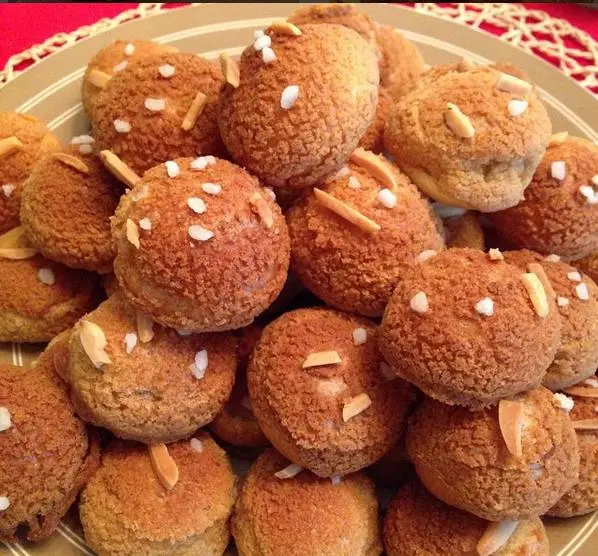
No. Craquelin is useful when I want a sweeter, more regular and textured choux surface, but it is not required for classic profiteroles.
For this version I keep the shell plain because the vanilla ice cream and chocolate sauce already provide enough sweetness and richness.
My rule for profiteroles
I prepare the components separately and judge each one on its own: the choux must be dry, the vanilla ice cream must be firm and clean-tasting, and the chocolate sauce must be glossy and warm rather than hot.
Then I assemble at the last possible moment. That timing is what preserves the contrast that makes a classic profiterole worth making.