Dark, milk and white chocolate are not three strengths of the same ingredient. Each has a different balance of cocoa solids, cocoa butter, sugar and, in milk and white chocolate, milk ingredients. When I change the type of chocolate, I change both flavour and structure.
This is why I do not replace dark chocolate with milk or white chocolate gram for gram in a ganache or mousse. The preparation may become sweeter, softer or firmer even when the method remains identical.
Dark chocolate
Dark chocolate contains cocoa materials and sugar, with possible ingredients such as lecithin and vanilla. It normally gives the clearest cocoa intensity and contains no milk ingredient by definition, although an individual product may include milk or carry a cross-contact warning.
I use dark chocolate when I want bitterness, roasted depth or acidity to remain visible. It works naturally with coffee, nuts, caramel, tonka, spices and acidic fruit.
A higher cocoa percentage does not automatically mean better chocolate. It can also make a mousse or ganache less sweet and more structured, so the complete formula must suit it.
Milk chocolate
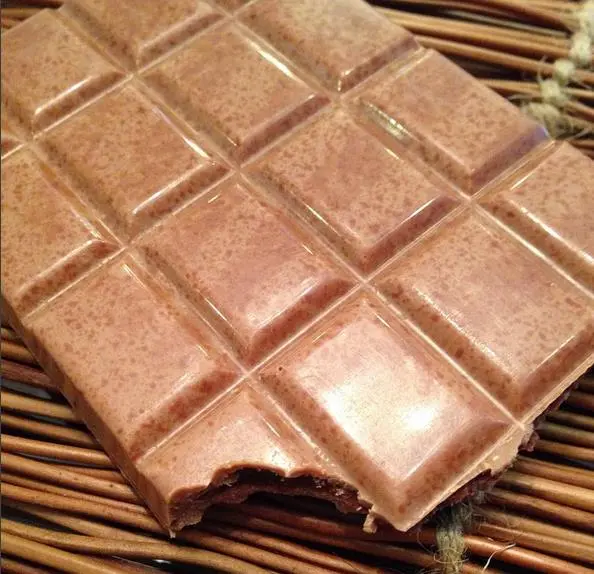
Milk chocolate combines cocoa materials, sugar and milk ingredients. It is usually sweeter and rounder than dark chocolate, with a softer cocoa impression and a distinct dairy character.
I like it with hazelnut, almond, caramel, banana, coffee, passion fruit and tart berries. The usual problem is not that milk chocolate lacks sophistication; it is that the whole dessert can become too sweet. I balance it with acidity, salt, roasted flavours or a restrained supporting cream.
Milk chocolate is not lactose-free unless the exact product is specifically formulated and labelled that way.
White chocolate
White chocolate contains cocoa butter, sugar and milk ingredients but no non-fat cocoa solids. It is still legally chocolate when it meets the required composition; it is not simply vanilla-flavoured sugar.
Its cocoa butter is technically useful in ganache, mousse, glaze and crémeux, while its dairy sweetness creates a gentle background for vanilla, citrus, herbs and fruit.
Because white chocolate contains milk ingredients and often a high proportion of sugar, I formulate around it rather than using it as a pale substitute for dark chocolate.
What about blond and ruby chocolate?
Blond or caramelised-style chocolate gives toasted milk, biscuit and caramel notes. Ruby chocolate has a naturally distinctive fruit-acid profile and colour created through its particular cocoa material and processing.
I treat both as separate flavour ingredients. Their colour may attract attention, but I choose them only when the taste belongs in the dessert.
What couverture means
Couverture is chocolate with a composition suited to professional coating and chocolate work. Under EU rules, dark couverture has defined minimum cocoa solids and cocoa-butter content. The practical result is often the fluidity needed for thin shells, enrobing and decoration.
Couverture is not automatically the best choice for every cake. Its extra cocoa butter and technical characteristics are valuable when I need them. In a baked sponge or cookie, a different chocolate may give an equally good result.
Chocolate versus compound coating
Compound coating uses another vegetable fat to perform much of the structural work of cocoa butter. It often sets without classical chocolate tempering and can be useful for economical or heat-tolerant production.
It does not melt or release flavour in the same way as cocoa-butter chocolate. I call it what it is and choose it for convenience only when that trade-off is acceptable.
Can I use chocolate chips instead of couverture?
Sometimes, especially in cookies where I want pieces to retain shape. Chips may be formulated for baking rather than fluid coating, so they can be unnecessarily thick for ganache, moulding or decoration.
The shape itself is not the deciding factor. I read the ingredients and technical purpose. Professional couverture sold as fèves, callets or pistoles can look like chips while behaving very differently.
What the cocoa percentage really tells me
The percentage describes total cocoa-derived ingredients. It does not tell me how much is cocoa butter and how much is non-fat cocoa material. It also does not tell me origin, roast, acidity, bitterness, sugar balance or fluidity.
I use the number to orient myself, then read the ingredient list, technical sheet and intended application. Two chocolates with the same percentage are not guaranteed substitutes.
How I choose
- For a bar or decoration, I prioritise flavour, cocoa-butter melt, fluidity and tempering behaviour.
- For ganache, mousse or crémeux, I consider flavour together with final set and sweetness.
- For baking, I ask whether the chocolate's subtleties will survive heat and the other ingredients.
- For an inclusion, I decide whether I want the piece to melt, spread or retain its shape.
- For any substitution, I test the finished preparation at its serving temperature.
The short answer
Dark chocolate is not simply stronger milk chocolate, and white chocolate is not merely dark chocolate without colour. Each is a separate formulation.
The best type is the one that gives the dessert the flavour, sweetness, melt and structure it needs.